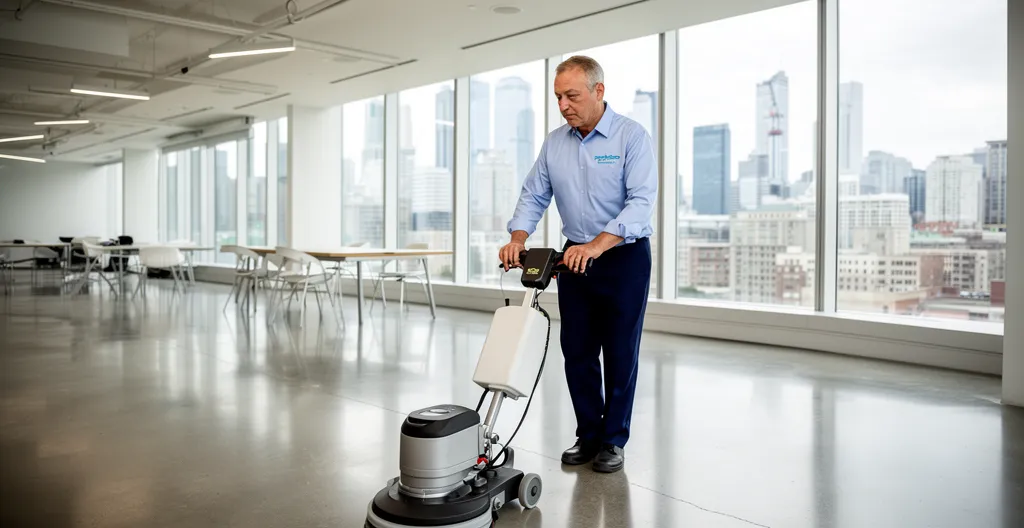
Your receptionist just apologized to a client for the dusty conference table. Two employees called in sick this week. Someone left a passive-aggressive note about the washroom. Sound familiar? Working with businesses across the Greater Toronto Area, I’ve noticed these small frustrations add up faster than most office managers realize. The question isn’t whether your workplace needs better cleaning. It’s whether you can afford to keep ignoring the problem.
3 ways professional cleaning transforms your workplace:
- Reduces sick days by targeting high-touch surfaces employees miss
- Eliminates the hidden costs of inconsistent in-house cleaning
- Creates the professional environment clients notice immediately
The Hidden Costs of a Poorly Maintained Workplace
Let me tell you what I see when I walk into a new client’s office for the first assessment. Dust on computer monitors. Grime around door handles. That faint musty smell from carpets that haven’t been deep cleaned in months. The daily tidying gets done, sure. Bins emptied, desks wiped. But the accumulation happens in places nobody thinks about.

69%
Proportion of employees with paid sick leave in provinces like BC and Quebec—meaning when illness spreads in your office, it hits your payroll directly
According to research from the Future Skills Centre, the most common reason Canadians go into work sick isn’t financial need—it’s a sense of responsibility to their job and coworkers. Noble, yes. But it means one sick employee becomes three sick employees within a week when high-touch surfaces aren’t properly sanitized.
The math gets ugly. In my experience servicing offices across the GTA, businesses that rely only on daily surface tidying without scheduled deep cleaning end up with significant buildup in ventilation systems and shared equipment. This observation is specific to medium-density offices and may vary based on your industry and building ventilation. But the pattern is consistent: cut corners on cleaning, pay more in sick days and equipment replacement.
How Professional Cleaning Directly Impacts Productivity

What clients often overlook is the connection between clean air and clear thinking. When dust accumulates in HVAC systems and carpets, it recirculates every time the heating kicks on. Staff complain about headaches, fatigue, “that stuffy feeling.” They blame the weather, the fluorescent lights, Monday mornings. Rarely does anyone point at the air vents.
The Canadian Centre for Occupational Health and Safety recommends increasing the number of times touch points and surfaces are cleaned—specifically doorknobs, light switches, and shared equipment. That recommendation exists because standard daily cleaning doesn’t address transmission points effectively. Professional cleaning services follow protocols designed around these guidelines, not just visual cleanliness.
Case study: How one Mississauga firm transformed their office environment
I’ve been working with Sarah, an operations manager at a 45-person accounting firm in Mississauga, since 2023. When she first called, her team was struggling with high absenteeism during flu season. The in-house cleaning was inconsistent—some areas got attention, others didn’t. Staff complained about visible dust on equipment and chronically dirty washrooms.
We implemented a structured protocol: twice-weekly deep cleaning of high-touch surfaces, monthly carpet extraction, quarterly HVAC vent cleaning. Within three months, Sarah stopped fielding employee complaints. The visible difference wasn’t subtle either—clients started commenting on how “fresh” the office felt.
The most common mistake I see is thinking cleaning is cleaning. A staff member emptying bins doesn’t mean your reception area creates the right impression for clients. A quick desk wipe doesn’t address the keyboard harbouring more bacteria than a toilet seat. Soyons clairs: professional cleaning isn’t about doing more of the same. It’s about doing what actually matters.
What Sets Professional Services Apart from In-House Cleaning
Here’s where office managers often get stuck. They’re spending money on cleaning already—why pay more for an outside company? The answer lies in what you’re actually paying for with each approach.
The comparison below breaks down the real differences. This isn’t about making in-house cleaning look bad. Sometimes it makes sense for very small offices or specialized environments. But for most businesses running spaces of 3,000 square feet or more, the numbers tell a clear story.
| Factor | In-House Staff | Professional Service |
|---|---|---|
| Equipment | Basic supplies, mops and buckets | Commercial-grade machines, HEPA vacuums, professional disinfectants |
| Training | Minimal, often learned on the job | Certified protocols, WHMIS compliance, ongoing education |
| Hidden Costs | Payroll taxes, benefits, workers’ comp, sick coverage, recruitment | Single invoice, no HR overhead |
| Consistency | Depends on individual employee motivation and supervision | Standardized checklists, quality control, backup coverage |
| Deep Cleaning | Rarely happens, requires separate contractors | Built into service schedule |
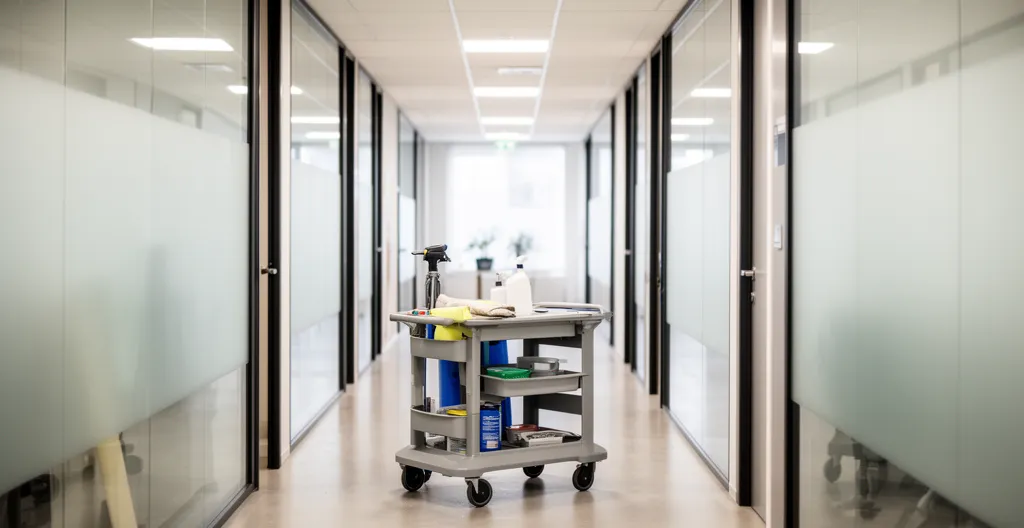
According to industry cost analysis from 2024, professional cleaning services eliminate employment-related costs like payroll processing, benefits administration, and workers’ compensation insurance. There’s no recruiting, no training programs to manage, no scrambling when your cleaner calls in sick or quits.
When you’re ready to evaluate providers, understanding the criteria for choosing a cleaning company makes the difference between a service that delivers and one that disappoints. Franchement, not all companies operate at the same standard—your due diligence matters.
Your Questions About Hiring a Cleaning Service
I hear the same concerns from every office manager considering professional cleaning. Here are the honest answers.
Is professional cleaning actually worth the cost for a small office?
For offices under 1,500 square feet with fewer than 10 employees, the calculus is tighter. But once you factor in the true cost of an in-house cleaner—wages, supplies, equipment, HR administration, coverage during absences—professional services often come out comparable or cheaper. The real question is: what’s the cost of client impressions and staff health issues you can’t measure directly?
How do I know if a cleaning company is actually doing the work properly?
Reputable services provide checklists and quality audits. Ask about their supervision process, what happens when something is missed, and whether they use tracking systems. The best companies welcome accountability—it’s the ones who get defensive about oversight you should worry about.
What about security concerns with outside cleaners in our office?
Legitimate commercial cleaning companies run background checks on staff and carry liability insurance. Ask for proof of both. Many Ontario businesses also restrict cleaning to non-business hours and provide access protocols. Your building management likely already has procedures for third-party vendors.
How often should professional deep cleaning happen?
In my experience, most offices benefit from daily maintenance combined with weekly detail cleaning and quarterly deep cleans. High-traffic spaces or those with client-facing areas may need more frequent attention. Any good service will assess your space and recommend a schedule based on actual usage patterns, not a one-size-fits-all template.
If you’re seriously considering a change, getting an estimate for your cleaning services gives you concrete numbers to work with instead of guesswork.
The Next Step for Your Workplace
Your immediate action plan
-
Walk through your office tomorrow and note every surface that hasn’t been properly cleaned in the past week
-
Calculate what you’re actually spending on current cleaning when you include all hidden costs
-
Get at least two professional quotes to compare against your true current costs
Your workplace environment says something about your business before anyone speaks a word. The question isn’t whether professional cleaning matters—it’s whether you’ll address it proactively or wait until a client comments on the dusty conference table again.